

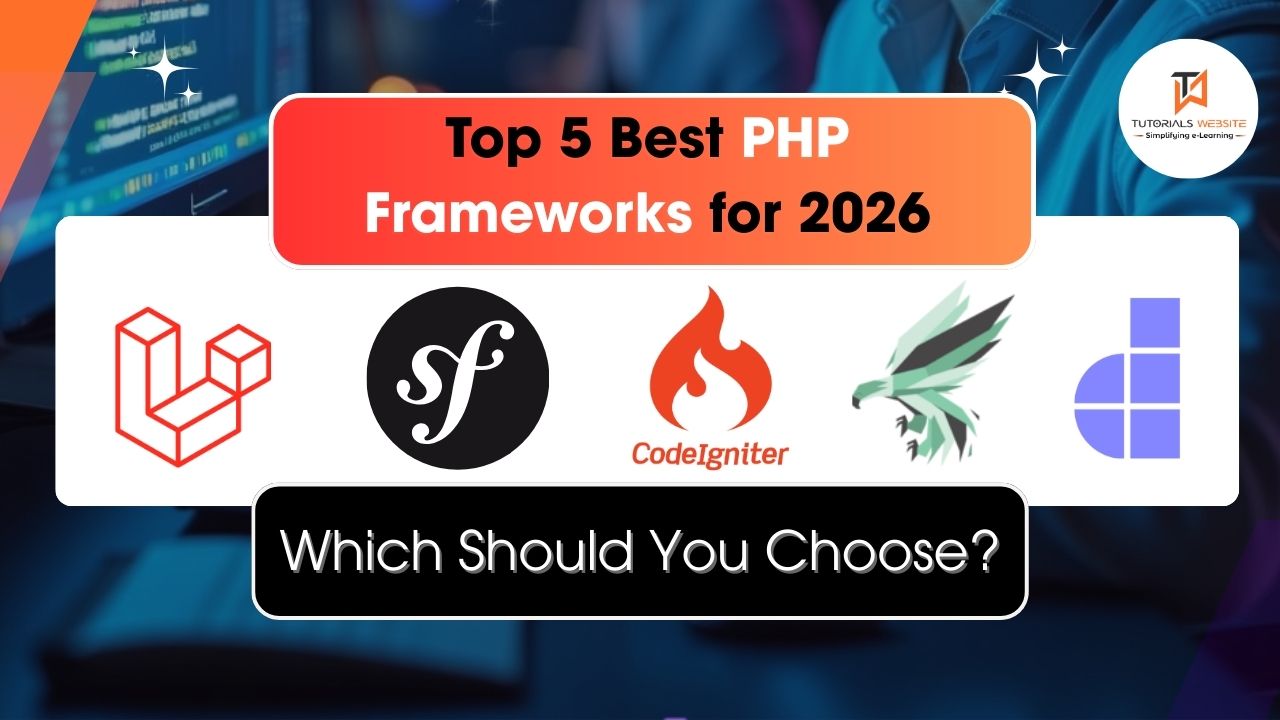
Let’s be honest, The PHP we’re writing in 2026 would probably look like alien technology to someone stuck in the version 5.6 era. It’s faster, leaner, and—dare I say—actually fun to work with again. The language has turned into an absolute powerhouse lately, and the framework scene is unrecognizable from what it was even three years ago.
I’ve been digging into the latest updates, and honestly? The gap between the “big names” and the “speed demons” is getting wider. Here is my breakdown of where you should actually put your dev time this year.
Top 5 PHP Frameworks to Master in 2026
1. Laravel: Still the “Everything” Framework
You can’t talk about PHP without starting here. In 2026, Laravel isn’t just a framework, it’s a productivity machine.
- The AI Edge: Laravel’s new AI-integrated scaffolding is a game changer. It feels like having a senior dev sitting next to you, writing your boilerplate and migrations in seconds.
- The Reality Check: It’s getting a bit “heavy.” If you’re building a simple microservice, Laravel might be overkill. But for a SaaS? It’s basically unbeatable because of the ecosystem (Forge, Vapor, Pulse).
- Best for: When you need to ship a complex product yesterday.
Also Read: Top 10 Backend Frameworks Every Developer Should Know in 2026
2. Symfony: The “Adult” Choice
If Laravel is the cool startup kid, Symfony is the architect with the 20-year plan. It’s strictly modular, highly standardized, and—frankly—a bit intimidating for beginners.
- Why it matters now: With PHP 9 features rolling out, Symfony’s commitment to strict typing and PSR standards makes it the safest bet for enterprise-grade apps.
- The Big Win: You don’t have to use the whole thing. Just need the Routing? Grab the component. Need the Mailer? Same thing.
- Best for: Projects where “stability” is a bigger priority than “speed of development.”
3. CodeIgniter 4: The “Underdog” Survivalist
I’ll admit, I thought CodeIgniter would fade away, but it’s doing the opposite. It’s become the go-to for devs who are tired of the “bloat” in modern web development.
- The Vibe: It’s incredibly fast because it doesn’t force you to use 50 different libraries you don’t need.
- The Use Case: I recently saw a high-traffic legacy site migrate to CI4 just to save on server costs, and the performance boost was massive.
- Best for: Lean projects, small teams, and shared hosting environments.
4. Phalcon: The Performance Freak
Phalcon is a weird one because it’s a C-extension. You install it as a module on your server.
- The 2026 Performance: Since the framework is resident in memory, it doesn’t have to “load” for every request. It just is. In 2026, it’s still the fastest way to run PHP, period.
- The Catch: If your hosting doesn’t let you install custom C-extensions, you’re out of luck.
- Best for: When every millisecond of latency equals lost revenue.
5. Doppar: The New Real-Time Disruptor
A newcomer to the “best-of” lists, Doppar has entered the chat to bridge the gap between PHP and high-performance languages like Rust or Go.
Keep an eye on Doppar. It’s the newcomer that’s finally bringing “native” real-time capabilities (like WebSockets and long-running daemons) to the PHP world without needing a separate Node.js server.
- The Innovation: Doppar features a daemon-mode scheduler and native Airbend (WebSockets) support. While traditional PHP handles tasks every minute (cron), Doppar is designed for sub-second tasks and persistent connections without needing external Node.js servers.
- Best For: Real-time data dashboards and performance-critical APIs that were previously “too heavy” for traditional PHP.
Final Verdict: Which one should you choose?
- Choose Laravel if you want the best tools and the largest community.
- Choose Symfony if your project will last 10 years and involves a large team.
- Choose CodeIgniter if you want to build something simple and fast today.
- Choose Phalcon or Doppar if your primary goal is outperforming every other app on the server.
If I’m starting a new SaaS today? Laravel. But if I’m building a high-performance API that needs to handle 10,000 requests a second? I’m looking at Doppar or Phalcon. PHP isn’t dying—it’s just getting started. Pick the tool that matches your scale, not just the one with the biggest logo.
Suggested Read: Why Learn PHP in 2026? Everything You Need to Know

Pradeep Maurya is the Professional Web Developer & Designer and the Founder of “Tutorials website”. He lives in Delhi and loves to be a self-dependent person. As an owner, he is trying his best to improve this platform day by day. His passion, dedication and quick decision making ability to stand apart from others. He’s an avid blogger and writes on the publications like Dzone, e27.co

[…] Suggested Read: Top 5 Best PHP Frameworks for 2026: Which Should You Choose? […]