When we talk about web development in 2026, one thing becomes very clear—the backend world is evolving faster than ever. From AI-powered applications to real-time communication and headless architectures, developers today expect their backend tools to be fast, secure, scalable, and extremely flexible.
And every year, certain frameworks naturally rise to the top because they make developers’ lives easier.
Suggested Read: How to Generate Dynamic QR Code with Razorpay API in PHP
As someone who has been in tech for years and has watched these frameworks grow, replace each other, and even come back into popularity—I can tell you, 2026 is a very interesting year for backend technologies.
So let’s walk through the 10 most popular backend frameworks in 2026, not with jargon or stiff definitions, but the way I would explain them on stage or to someone building a real product.
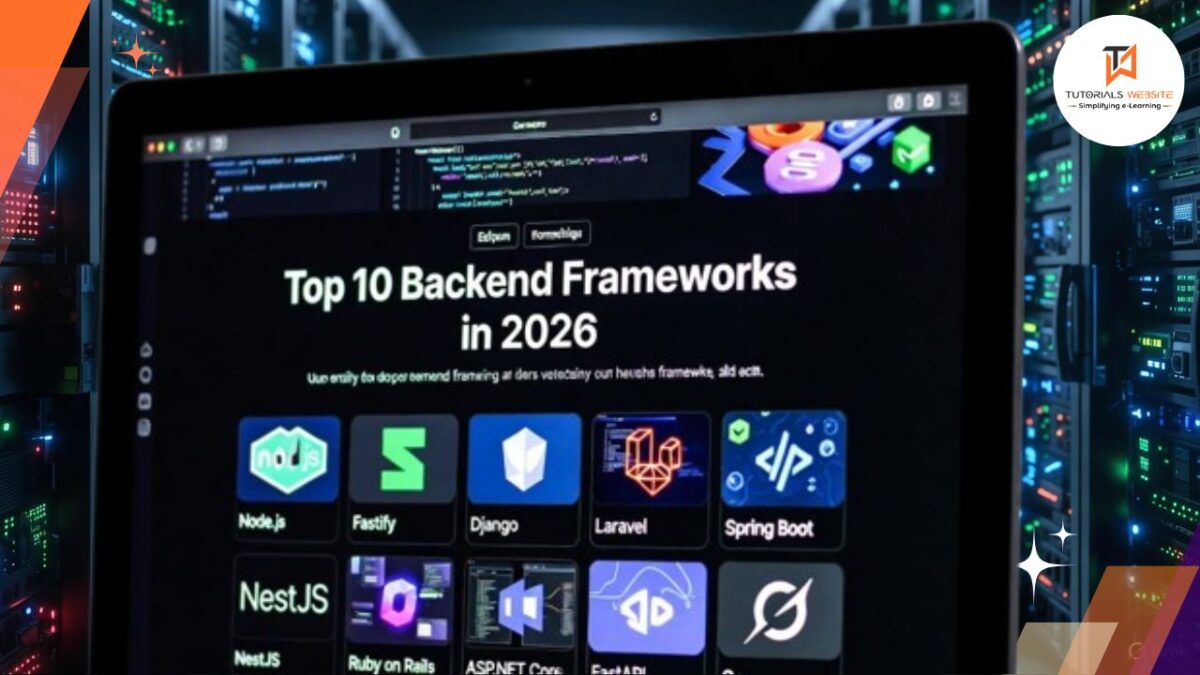
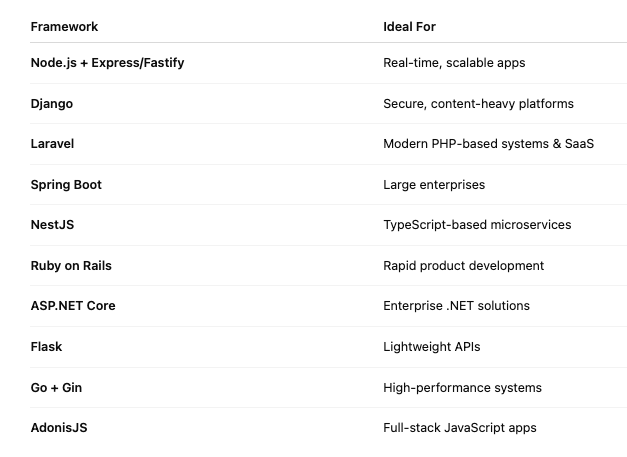
Top 10 Backend Frameworks Every Developer Should Know in 2026
1. Node.js + Express.js (still the undisputed king of real-time)
Why it’s #1 in 2026
- 43% of all professional developers use Node (Stack Overflow 2025)
- npm has 2.4+ million packages
- Perfect for WebSockets, live dashboards, chat, gaming servers
Real code that feels like 2026
// Express + Socket.io + Redis adapter in < 40 lines
import express from 'express';
import { createServer } from 'http';
import { Server } from 'socket.io';
import { createAdapter } from '@socket.io/redis-adapter';
import { createClient } from 'redis';

const app = express();
const server = createServer(app);
const io = new Server(server, { cors: { origin: "*" } });

const pubClient = createClient({ url: 'redis://redis:6379' });
const subClient = pubClient.duplicate();
await Promise.all([pubClient.connect(), subClient.connect()]);
io.adapter(createAdapter(pubClient, subClient));

io.on('connection', (socket) => {
  socket.on('message', (msg) => socket.broadcast.emit('message', msg));
});

server.listen(3000);
2. Django (Python)
2026 reality: Instagram, Spotify (parts), and most new AI startups use Django. Django 5.2+ is fully async.
Perfect 2026 use case – AI + web in one codebase
- Comes with everything: login, admin, permissions, ORM, security fixes you don’t even have to think about.
- Perfect marriage with the AI world — you train your model in Python, deploy the API in Django, done.
- Fun fact: Instagram still runs Django. So does Spotify’s backend for a ton of features. If it’s good enough for them in 2026
3. Laravel – The Most Elegant PHP Framework
PHP didn’t die. It got a glow-up.
If someone told me 10 years ago that PHP would still be one of the strongest backend languages in 2026, I might have smiled politely. But today, with Laravel at the center, PHP is very much alive and thriving.
Laravel’s strengths:
- Developer-friendly syntax (clean and beautiful)
- Built-in features like queueing, broadcasting, caching, sessions
- Strong community and regular updates
- Perfect for SaaS and enterprise-grade apps
Laravel is often the first choice for businesses migrating from legacy PHP systems into modern architectures.
Also Read: How to Integrate PhonePe V2 Standard Checkout in PHP
4. Spring Boot – The Enterprise Powerhouse
Java continues to dominate enterprise-scale systems—banking, insurance, logistics, telecom—and Spring Boot is the engine behind most of them.
Why Spring Boot stays strong in 2026:
- Highly scalable for large distributed systems
- Deep integration with Kubernetes & cloud-native tools
- Reliable performance under massive loads
If you’re building mission-critical applications where uptime is non-negotiable, Spring Boot remains unmatched.
5. NestJS – The Node.js Framework of the Future
NestJS is often described as “Angular for the backend”—structured, scalable, and extremely well-organized.
Why developers love it:
- Opinionated structure prevents messy codebases
- Built-in support for TypeScript
- Modular architecture for microservices
- Integrates smoothly with GraphQL, WebSockets, and Redis
By 2026, NestJS has become the top choice for building cloud-level applications using TypeScript.
6. Ruby on Rails – Still Relevant, Still Loved
Rails might not be in the headlines every day, but it has one of the most loyal developer communities.
Why Rails still matters:
- Rapid prototyping
- Convention over configuration
- Great for startups launching minimum viable products
- Mature ecosystem, stable releases, and predictable upgrades
If your goal is to launch a scalable web app quickly without reinventing the wheel, Rails still delivers.
Suggested Read: How to Add Custom Section to Shopify Product Page without App
7. ASP.NET Core – Microsoft’s High-Performance Framework
ASP.NET Core continues to dominate the world of enterprise .NET applications.
Key advantages:
- One of the fastest backend frameworks
- Cross-platform (Windows, macOS, Linux)
- High security and excellent tooling
- Works beautifully with Azure cloud services
Companies that prefer the Microsoft ecosystem will continue relying on ASP.NET Core for years.
8. Flask – The Lightweight Python Favorite
While Django is full-featured, Flask takes a very different approach. It’s minimalistic and gives developers full control over the architecture.
Why Flask remains popular:
- Perfect for APIs and microservices
- Very easy to learn
- Flexible—add only the components you need
If your project requires custom architectures without heavy frameworks, Flask is an excellent choice.
9. Go (Golang) with Gin – The Beast Behind Modern Infrastructure
Go has seen explosive growth, especially with the rise of cloud computing, automation, and tools like Docker and Kubernetes.
The Gin framework brings speed and simplicity together.
Why Go + Gin dominates backend engineering in 2026:
- Blazing-fast performance
- Extremely lightweight
- Ideal for microservices, DevOps tools, and high-load systems
- Loved for concurrency and clean syntax
Go is the favorite language for developers designing low-latency, high-performance APIs.
10. AdonisJS – The Full-Stack Node Framework
Often described as “Laravel for JavaScript,” AdonisJS has gained significant popularity in 2026 because it brings structure to Node.js development.
What makes AdonisJS special:
- Beautiful and consistent folder structure
- Built-in ORM
- Auth, validation, routing—everything included
- Excellent for building large, modular apps
Companies adopting Node.js at scale find AdonisJS a more structured alternative to lightweight frameworks.
Final Thoughts
In 2026, backend frameworks are judged not by hype, but by how effectively they solve modern challenges—speed, scalability, developer comfort, and long-term maintenance.

Pradeep Maurya is the Professional Web Developer & Designer and the Founder of “Tutorials website”. He lives in Delhi and loves to be a self-dependent person. As an owner, he is trying his best to improve this platform day by day. His passion, dedication and quick decision making ability to stand apart from others. He’s an avid blogger and writes on the publications like Dzone, e27.co